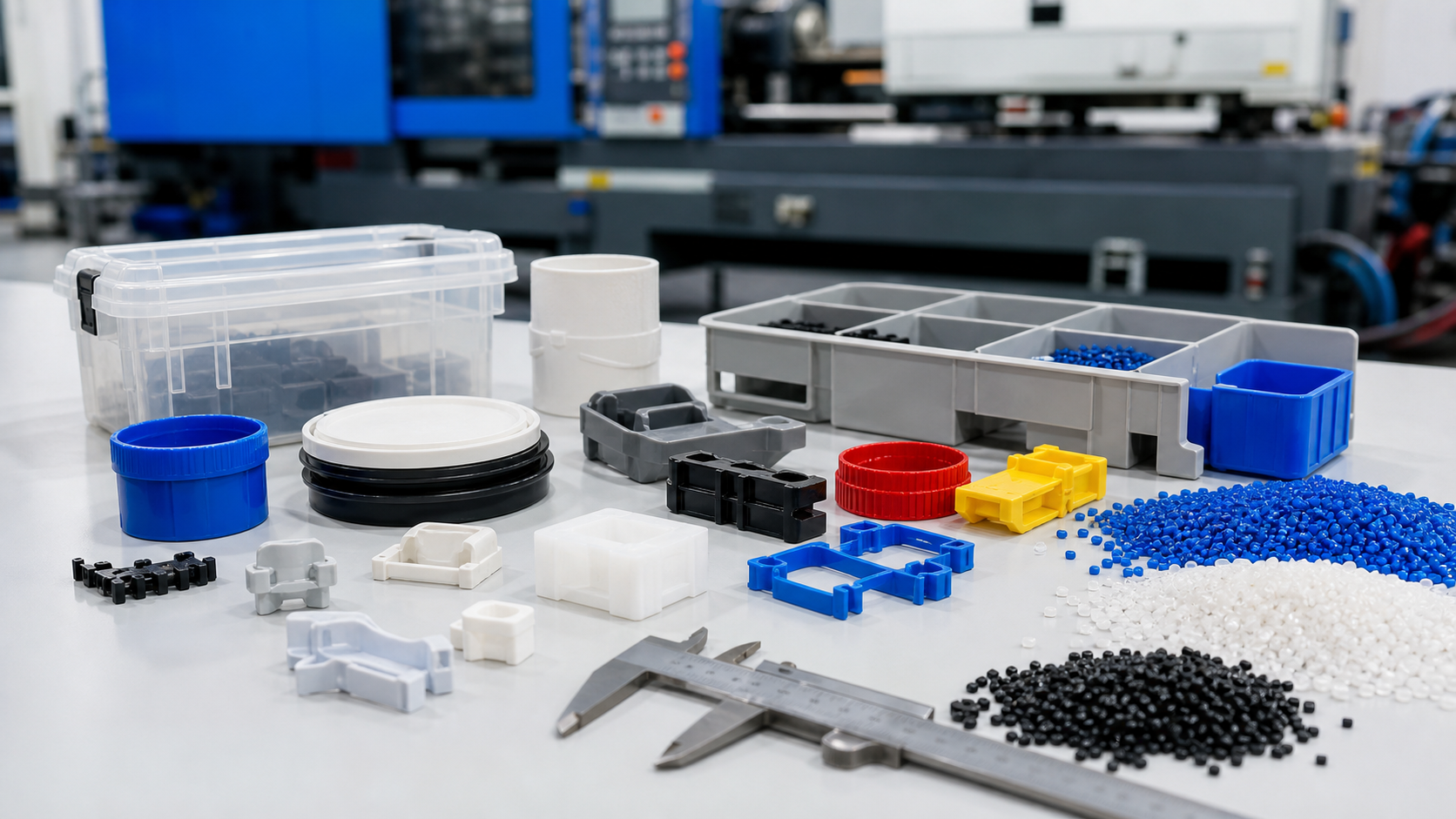
For overseas buyers, injection molded plastic products can be attractive because the unit cost becomes stable after tooling is finished. The challenge is that material choice, mold design, surface finish and packaging details all affect the final price and reliability. This guide explains the main points to check before sourcing injection molded plastic parts from China.
What Is an Injection Molded Product?
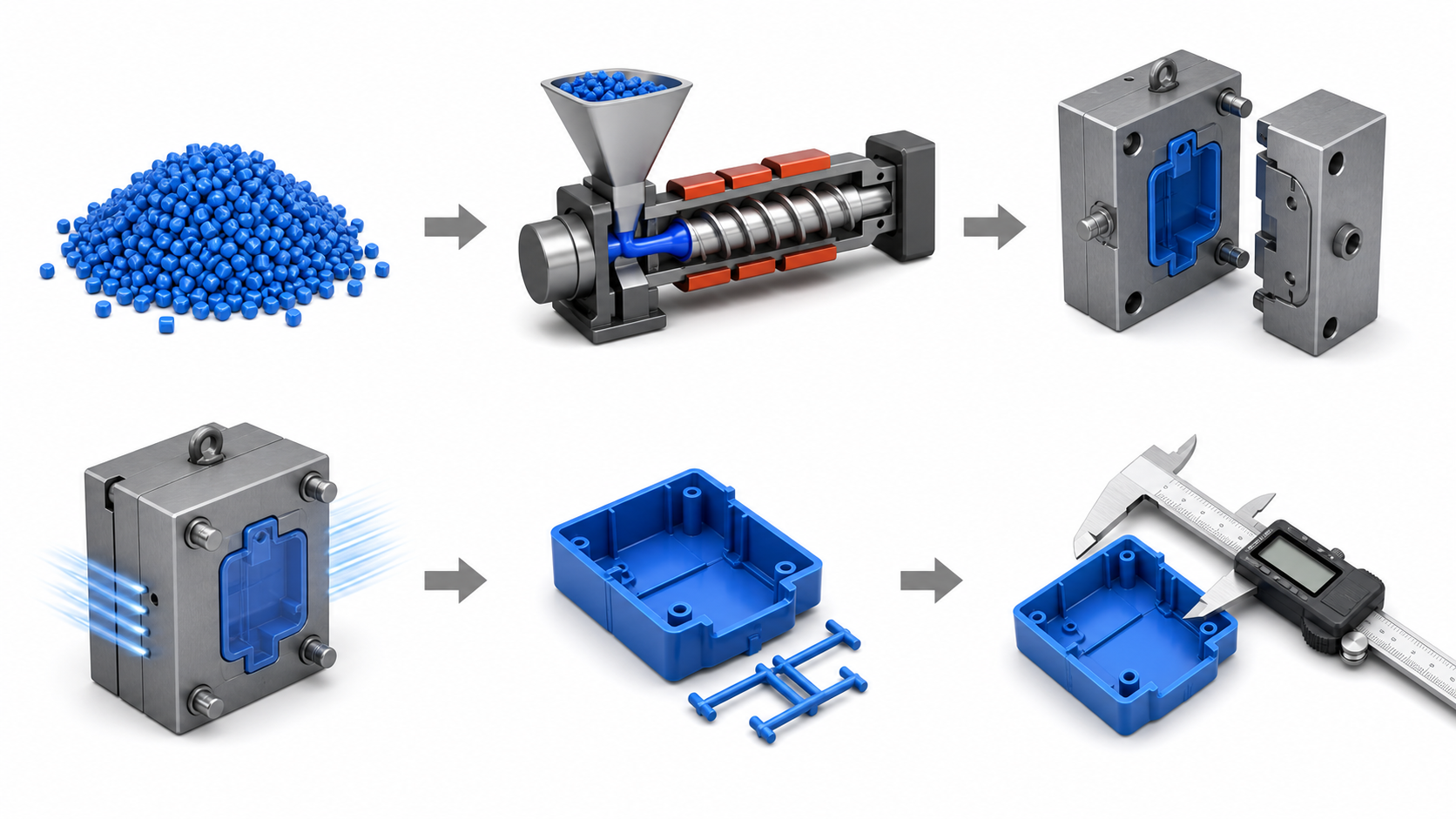
An injection molded product is made by melting plastic resin, pushing it into a metal mold under pressure, cooling the material, and ejecting the finished part. The method is widely used for plastic housings, clips, caps, handles, storage bins, furniture components, tool parts and many household items.
Compared with simple cutting or manual assembly, injection molding is best when the buyer needs consistent shape, repeatable dimensions, smooth surfaces and medium to large quantities. For small trial orders, buyers should confirm whether an existing mold can be used, because new mold tooling can be a significant upfront cost.
Common Plastic Materials and Where They Fit
Material selection should start with the product's use environment. A storage box, mop clip, folding chair fitting and cosmetic bottle cap may all be injection molded, but they do not need the same resin.
- PP (polypropylene): lightweight, economical and flexible enough for many household parts, storage products and lids.
- ABS: stronger surface feel and better dimensional stability, often used for housings, handles and visible product shells.
- PE: tough and chemical resistant, useful for containers, caps and some cleaning product components.
- PC: high impact strength and transparency options, suitable for stronger parts where cost is less sensitive.
- Nylon (PA): good wear resistance, often used for gears, sliders, brackets and functional fittings.
How the Injection Molding Process Works
The basic process looks simple, but every step influences the final product. Moisture in raw material can create bubbles. Mold temperature can affect shrinkage. Cooling time can change cycle speed and cost. A reliable supplier should be able to explain these tradeoffs clearly.
Key tooling questions
- Is the mold already available, or does a new mold need to be made?
- How many cavities does the mold have, and what is the estimated cycle time?
- What mold steel is used, and how many shots is the tool expected to support?
- Can the supplier provide samples before mass production?
Quality Checkpoints for Plastic Parts
Quality control for injection molded products is not only about appearance. Buyers should check dimensions, material consistency, color, surface defects, assembly fit and packaging strength. For functional components, load testing or repeated-use testing may be needed.
Buying Checklist Before Placing an Order
Before confirming an injection molded product order, buyers should prepare a simple but complete specification. This reduces back-and-forth communication and helps suppliers quote more accurately.
- Product drawing, sample photo or reference item
- Material preference, color and surface finish
- Size, weight and tolerance requirements
- Expected order quantity and repeat order plan
- Packaging method and shipping carton requirements
- Target market requirements such as REACH, RoHS, food contact or other tests if applicable
- Logo, label or barcode requirements
FAQ for Importers
Can injection molded products be ordered in small quantities?
Yes, if the supplier already has a suitable mold or if the product is part of an existing catalog. If a new custom mold is required, the buyer should calculate tooling cost, sample time and expected repeat orders before starting.
Why do the same plastic parts have different prices?
Price can change because of material grade, resin price, mold cavity count, cycle time, part weight, finishing work, packaging and inspection requirements. A heavier part or slower cycle usually increases unit cost.
What information should I send to get a useful quote?
Send product photos or drawings, target dimensions, material or usage requirements, quantity, color, packaging and destination country. If you only have an idea, a similar reference product is still helpful.
Need Help Sourcing Plastic Household Products?
Dapeng Trading helps overseas buyers source home goods, storage products, furniture accessories, cleaning tools and injection molded plastic parts from China. Send product photos, target quantity and packaging requirements to start a practical sourcing discussion.
Send Product Inquiry